
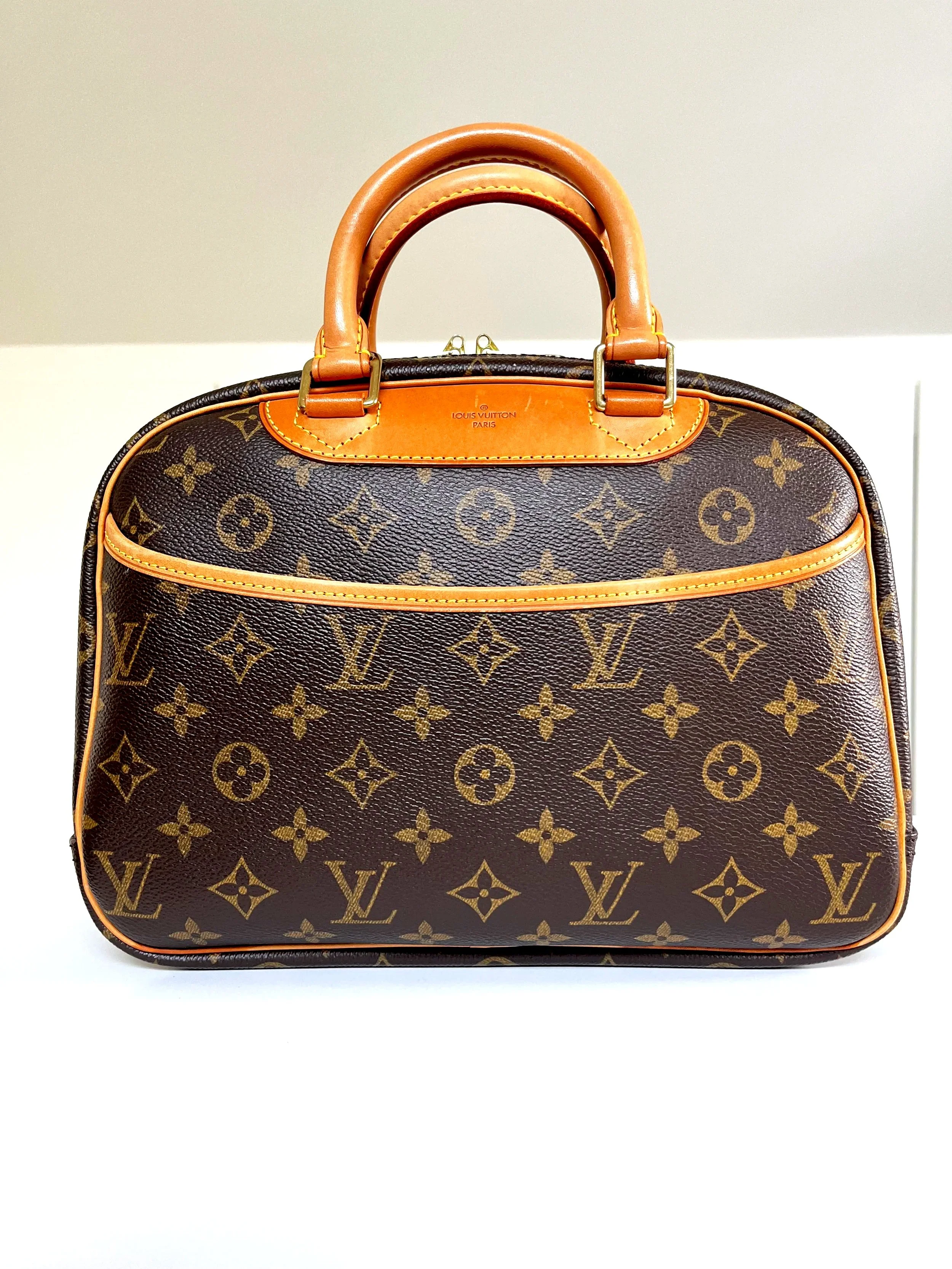
 Image 1 of 13
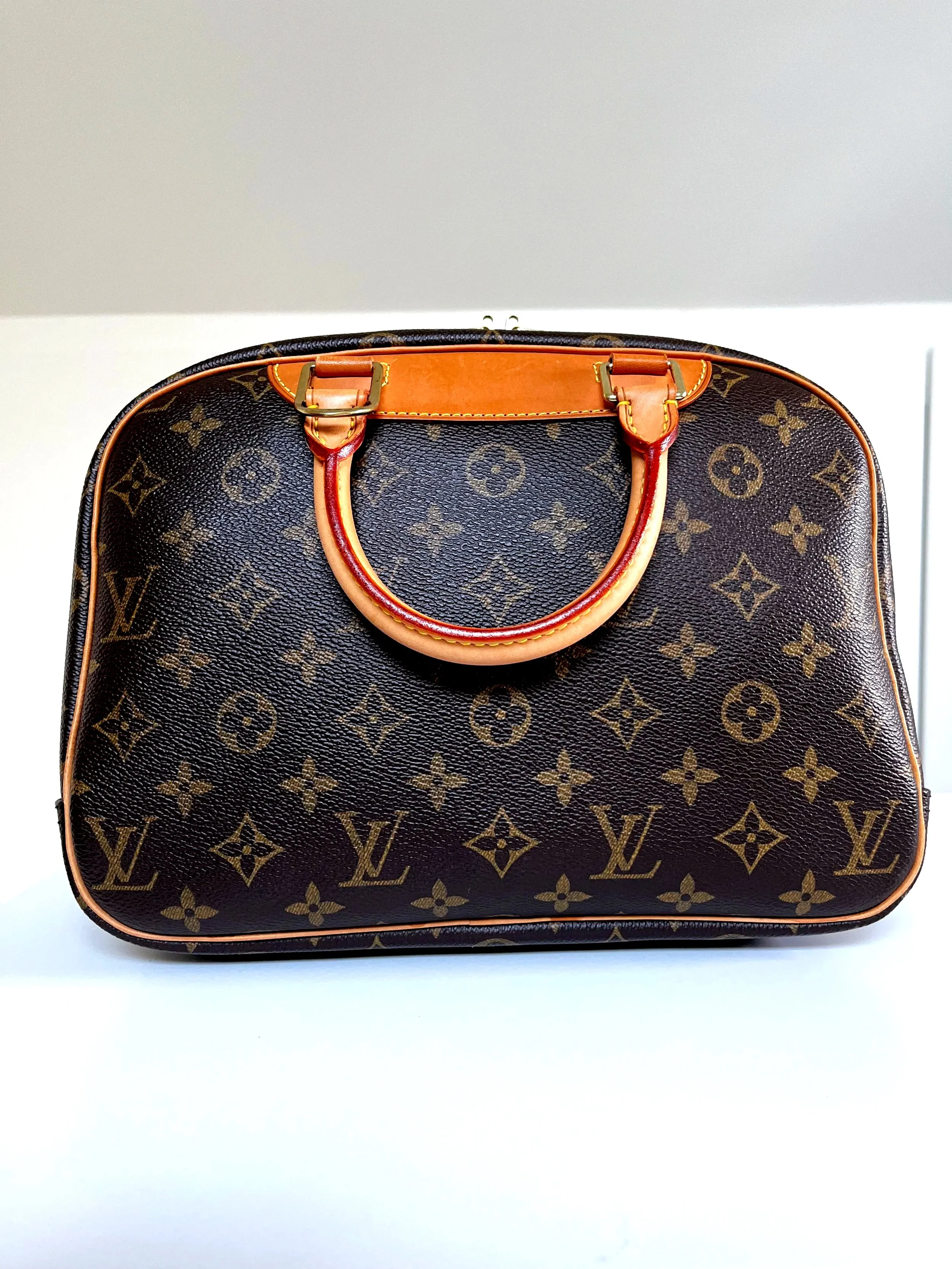 Image 2 of 13
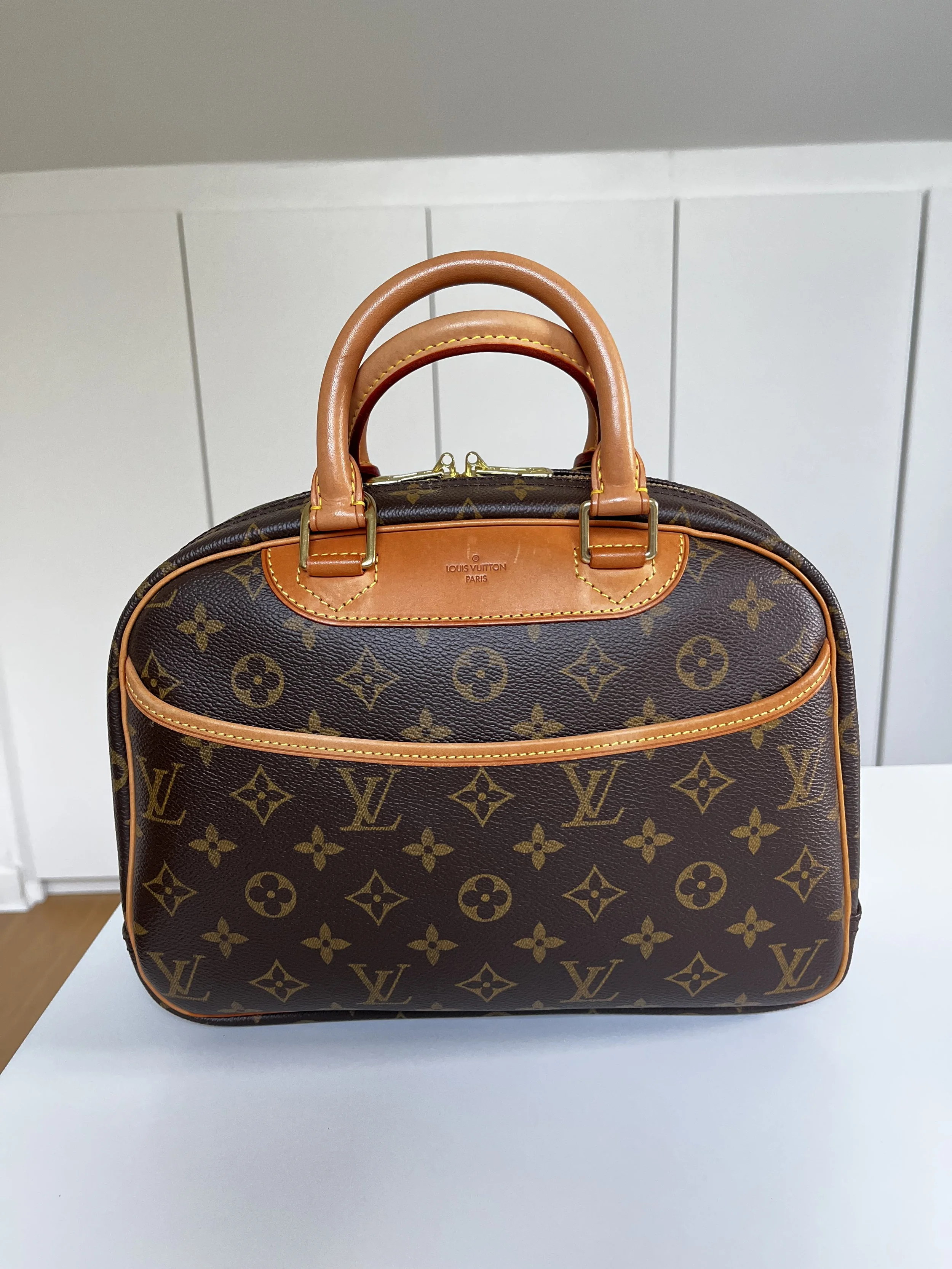 Image 3 of 13
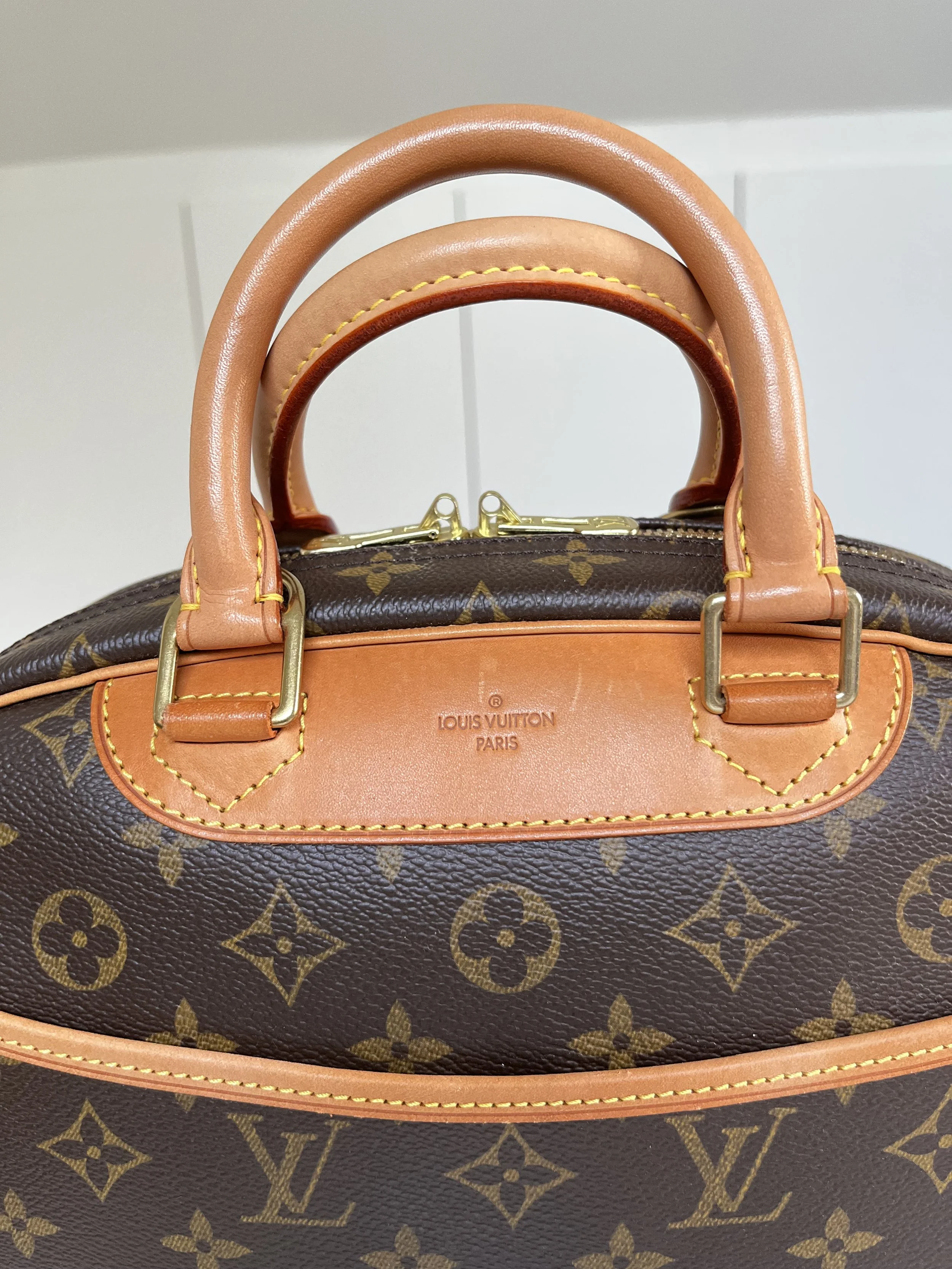 Image 4 of 13
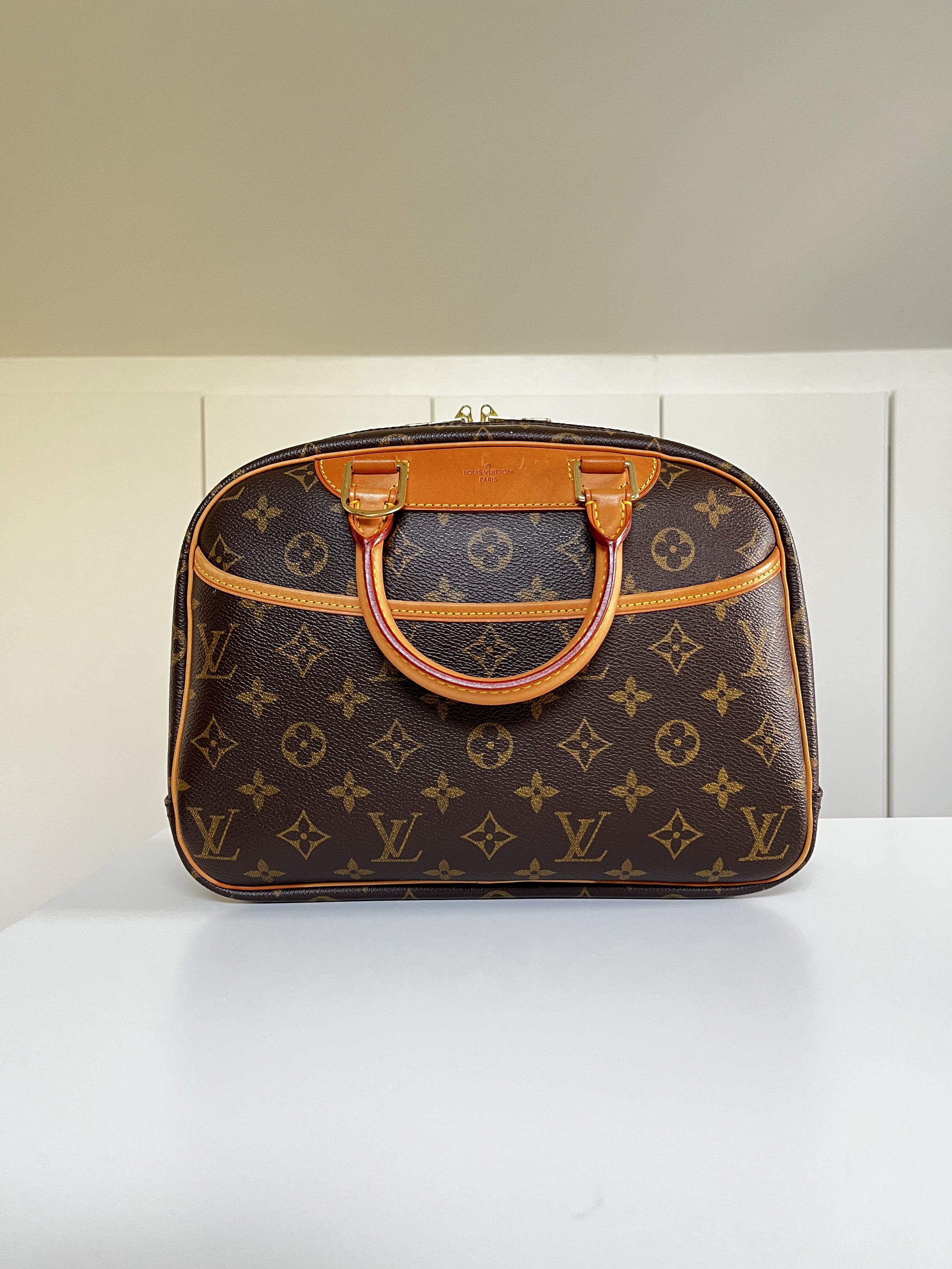 Image 5 of 13
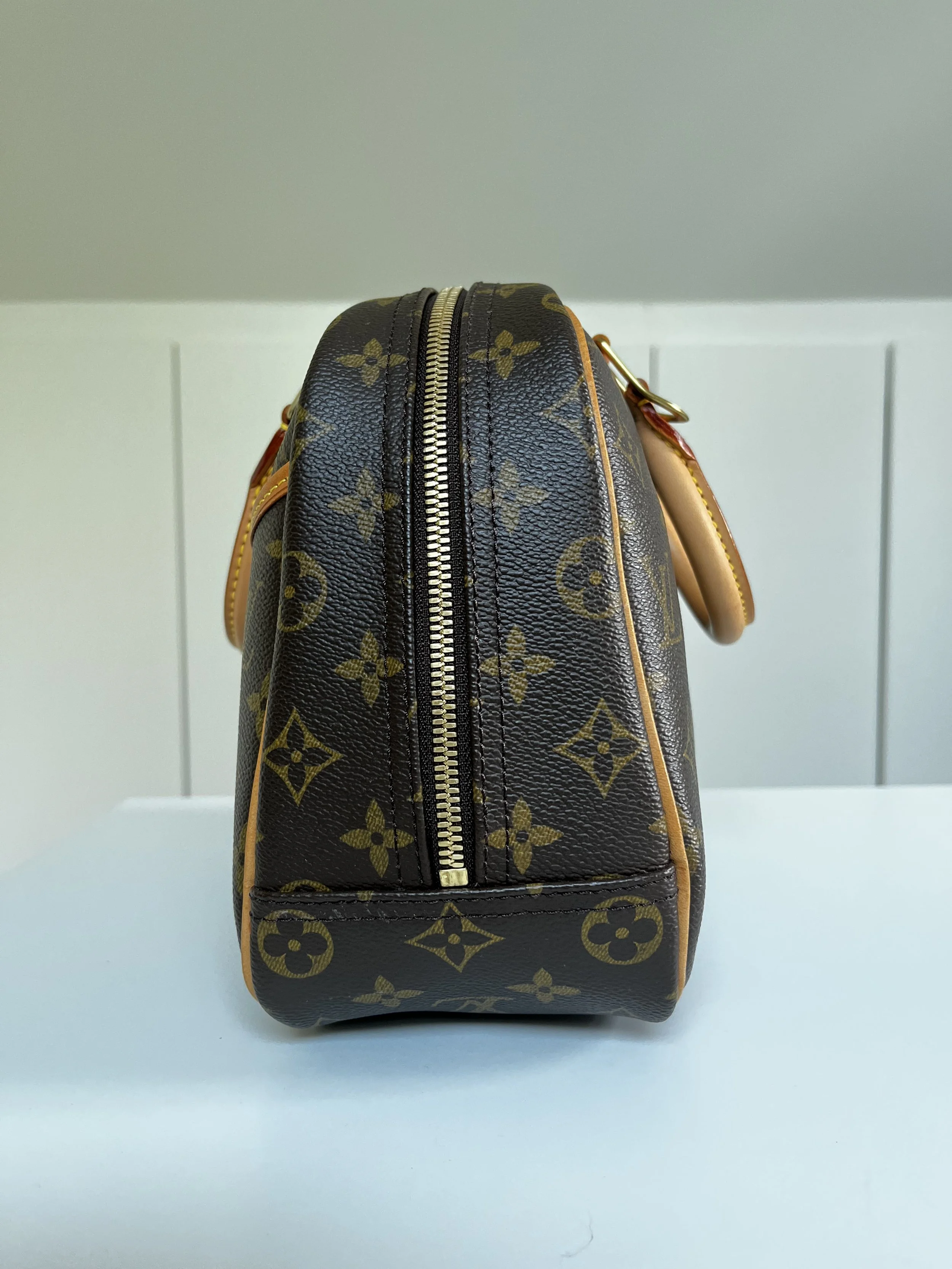 Image 6 of 13
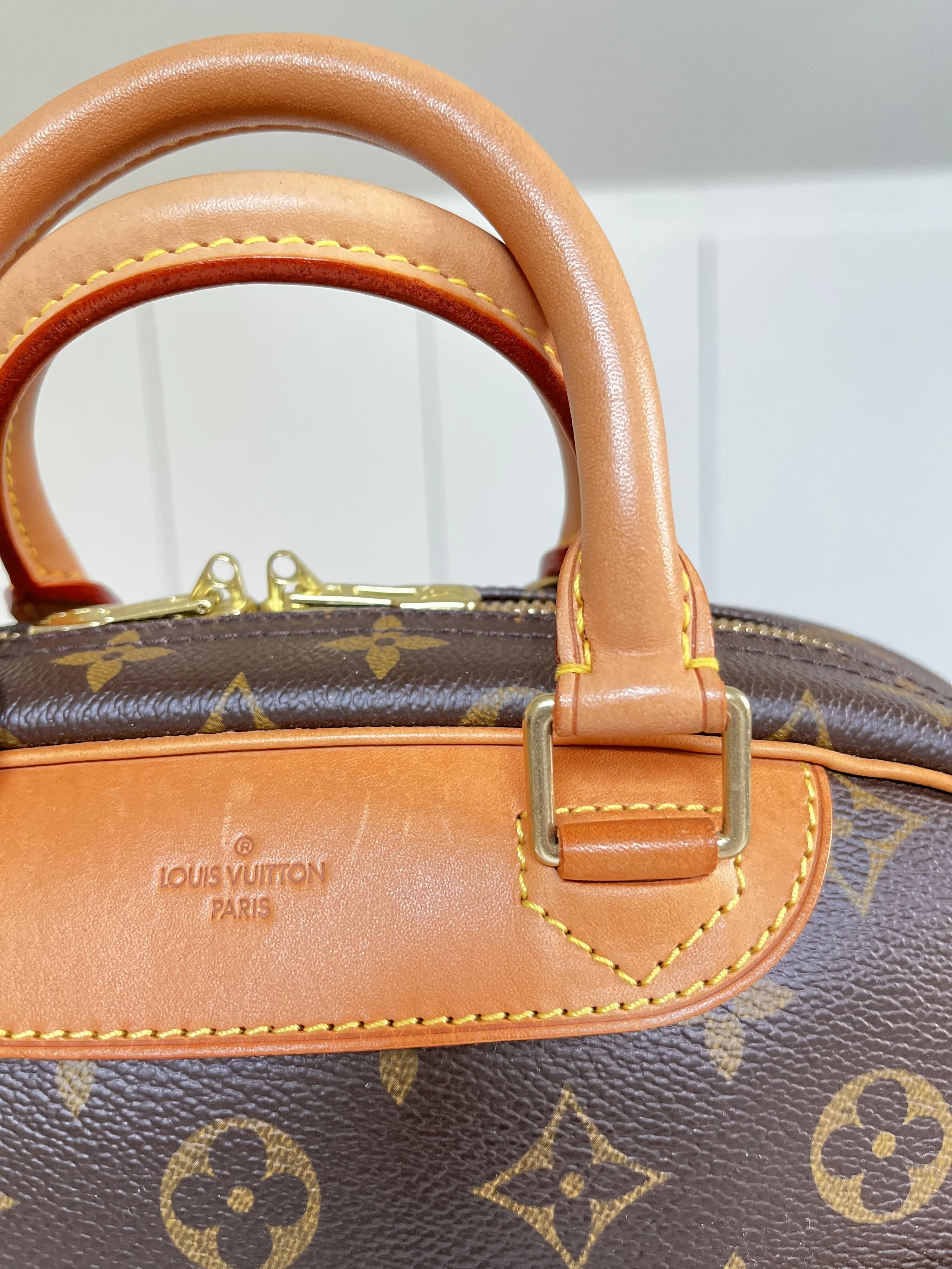 Image 7 of 13
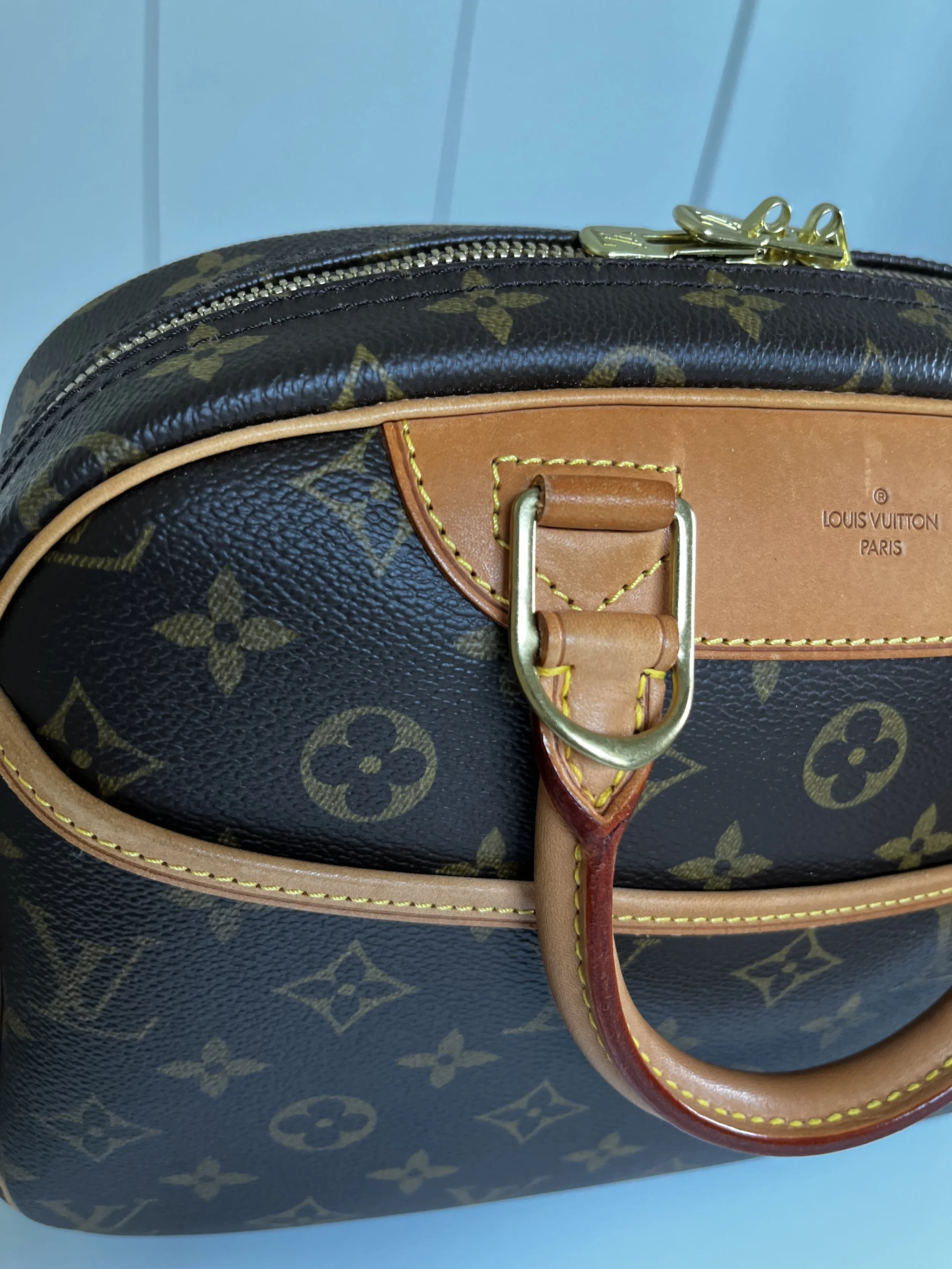 Image 8 of 13
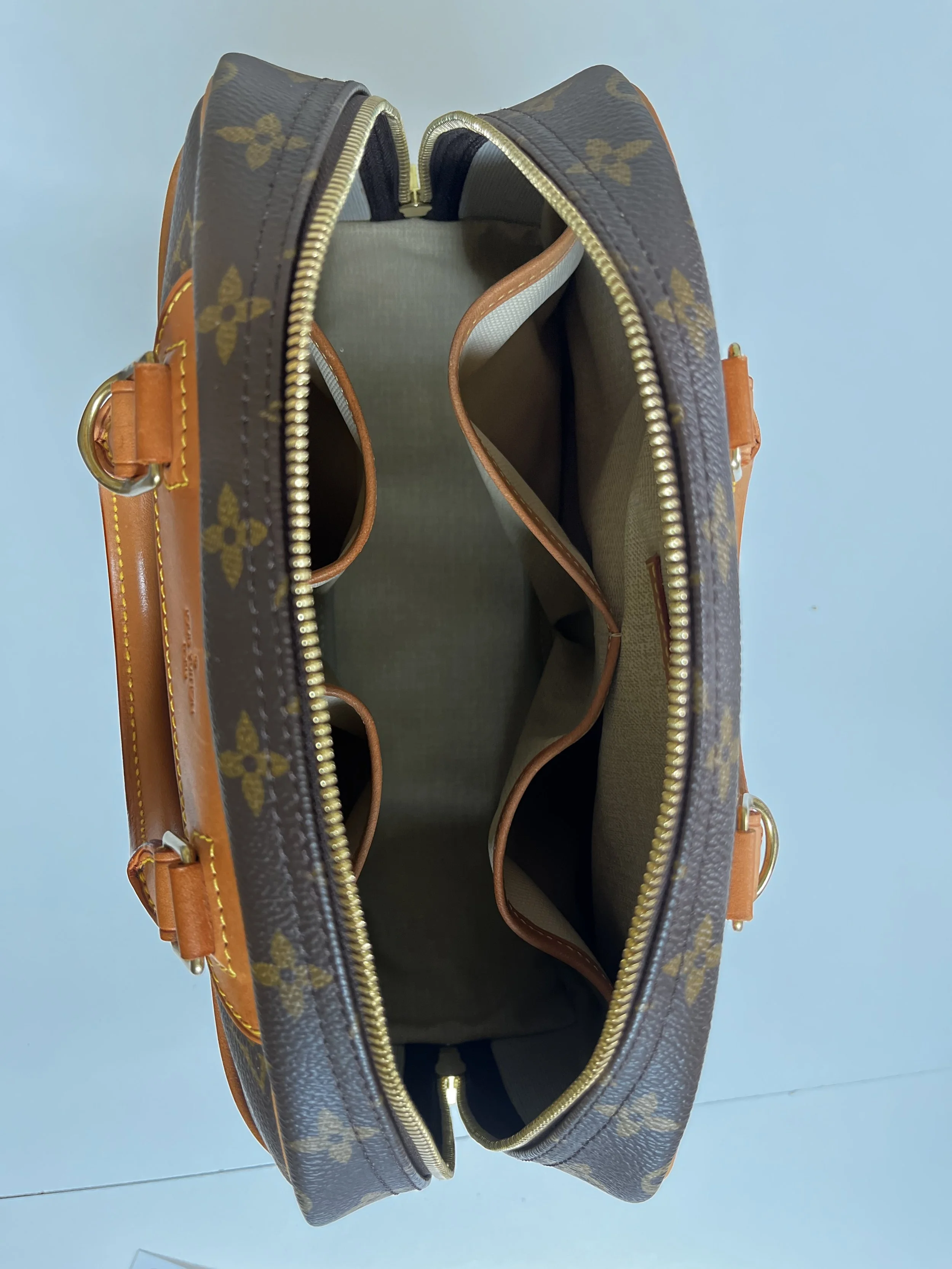 Image 9 of 13
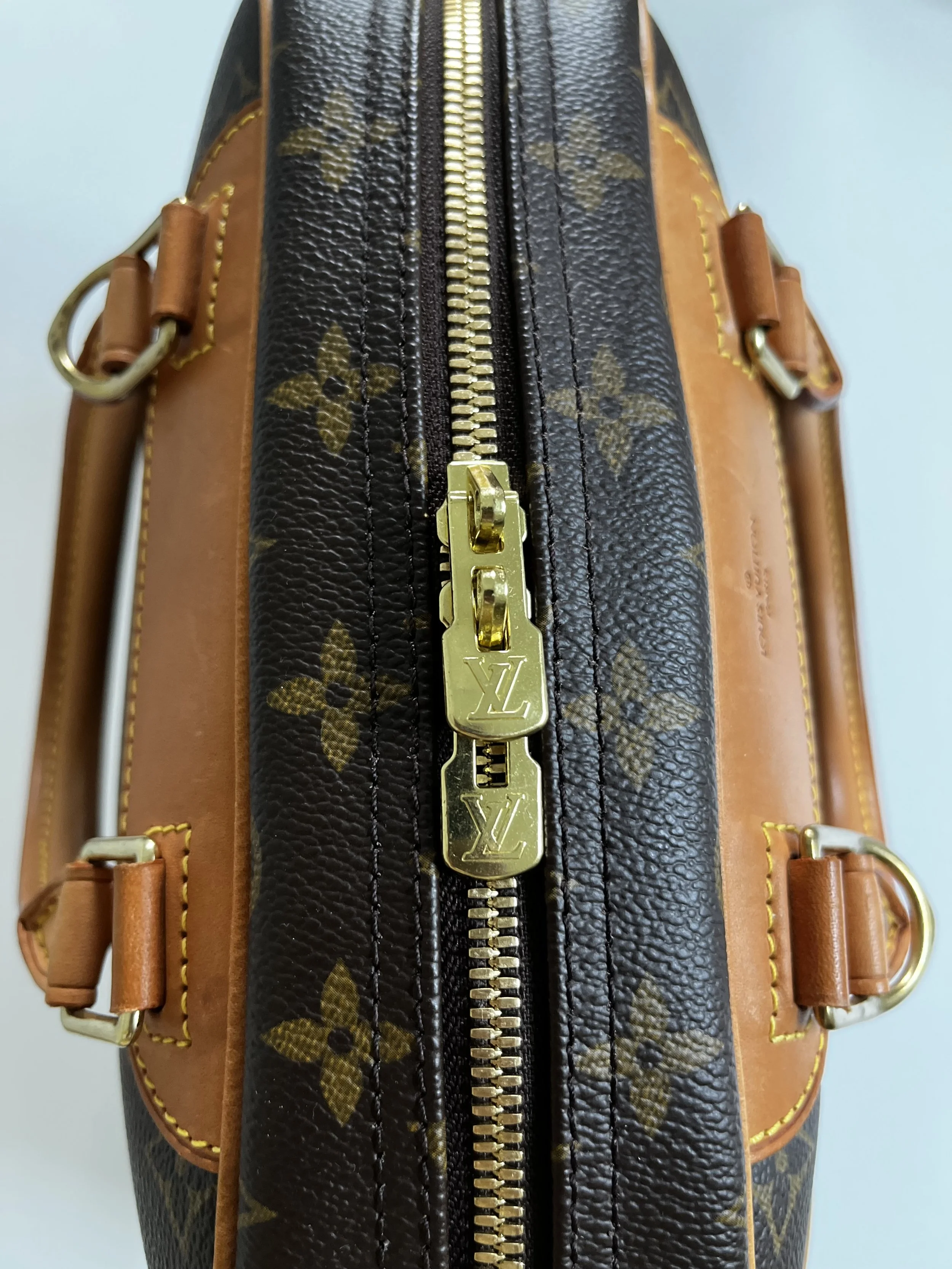 Image 10 of 13
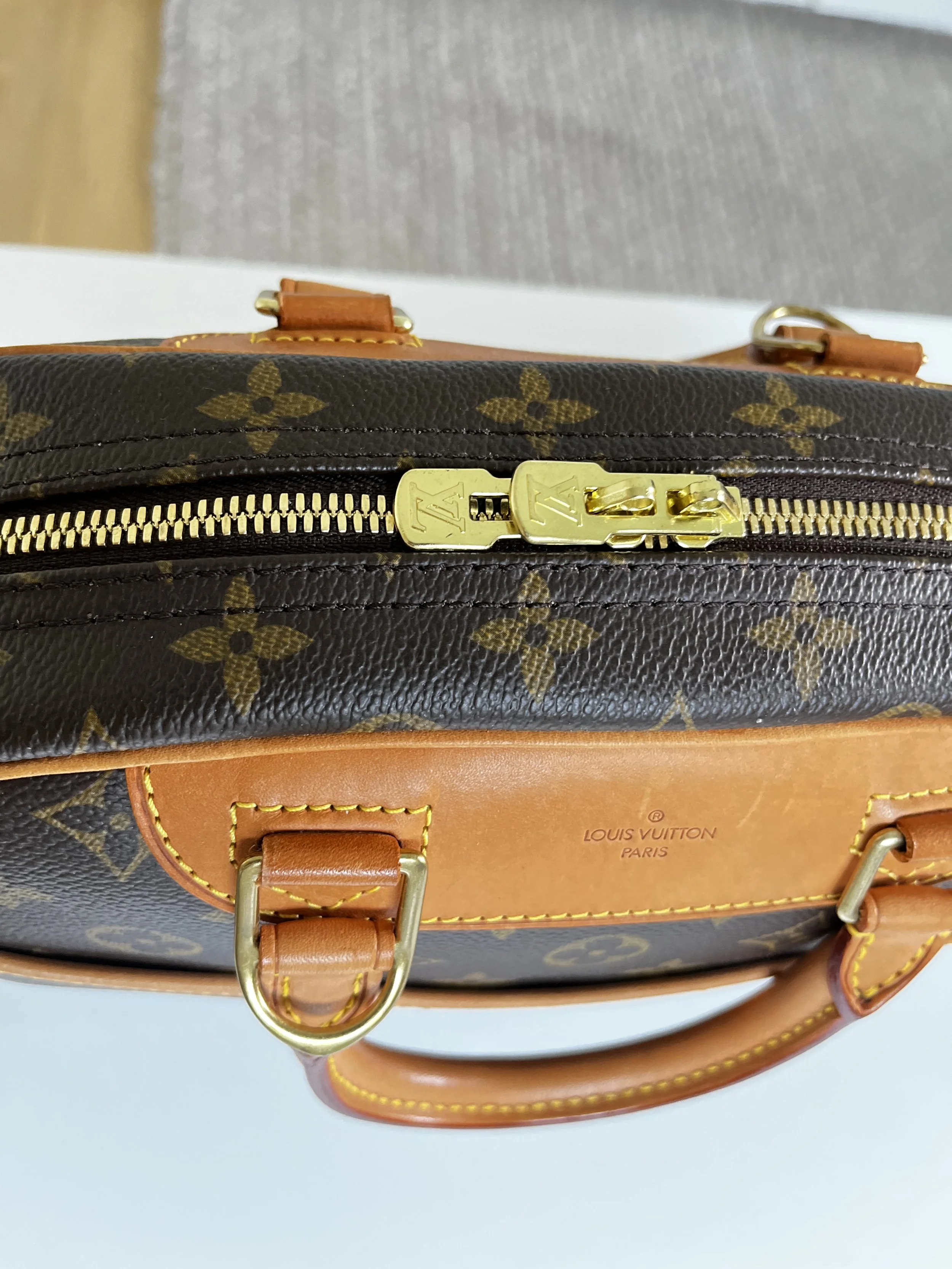 Image 11 of 13
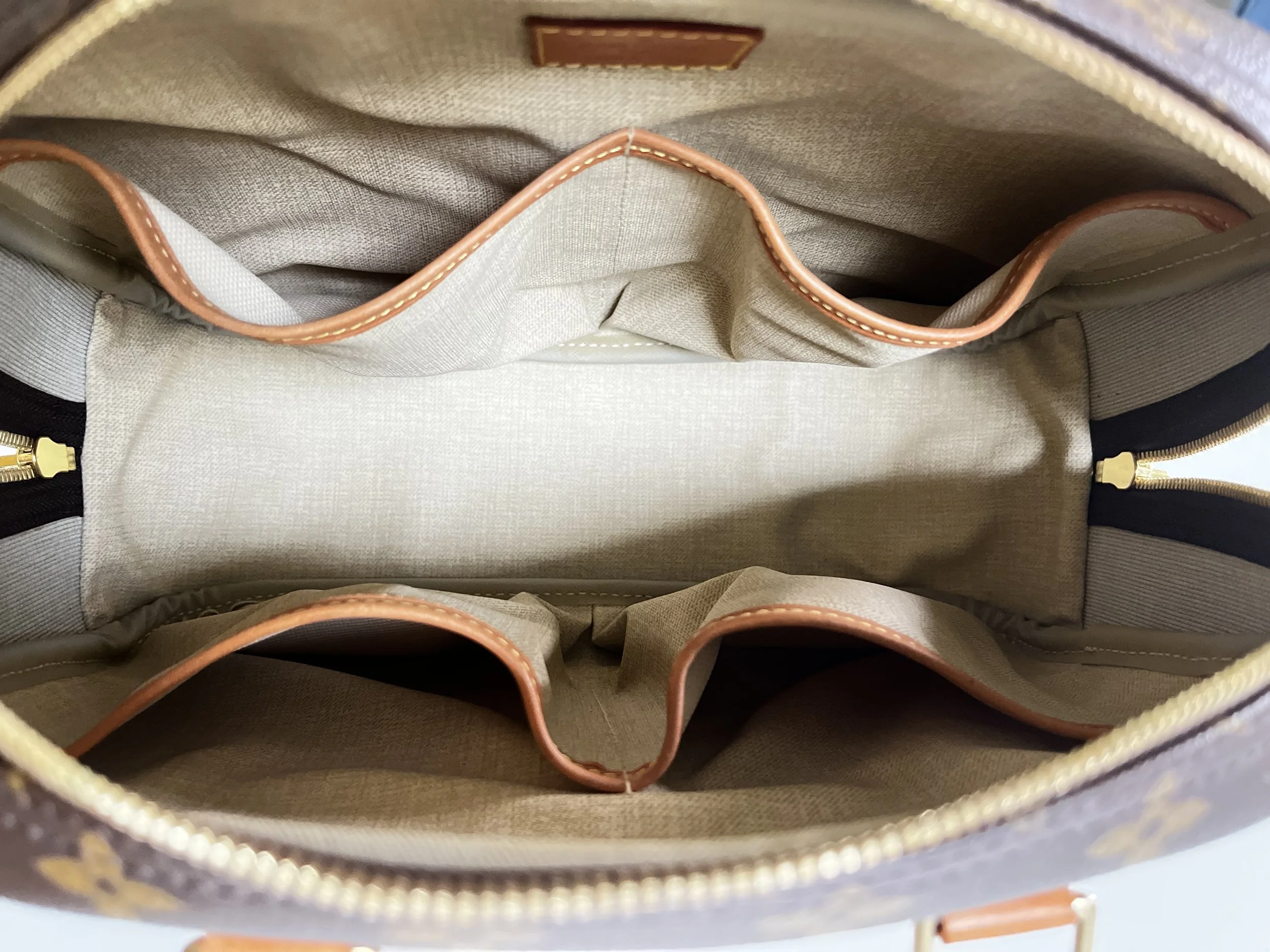 Image 12 of 13
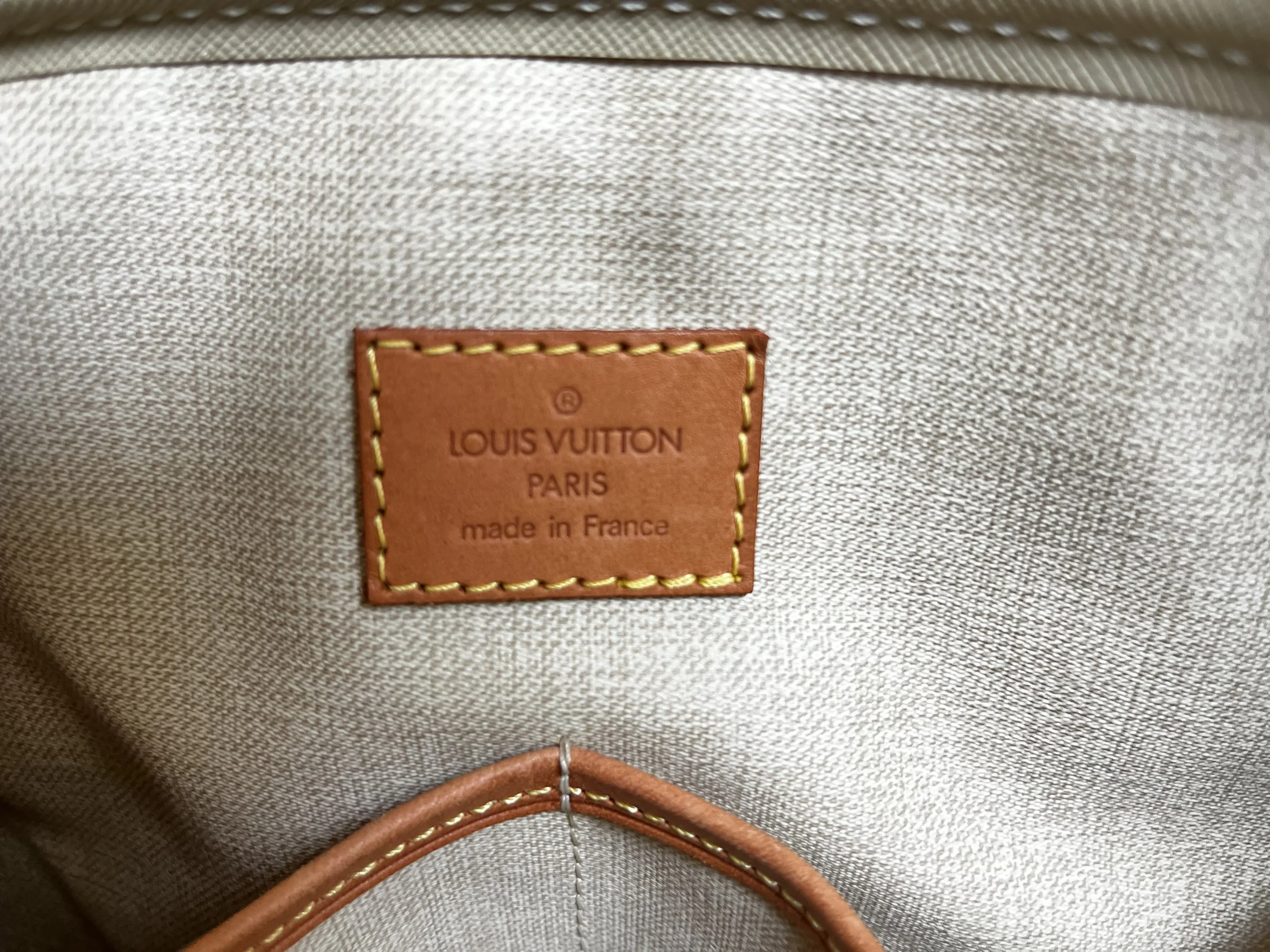 Image 13 of 13
-
Year : late 1990s to early 2000s production.
Colour : Brown Monogram canvas with natural light‑brown (vachetta) leather trim. Gold‑tone metal hardware
Material : Louis Vuitton coated Monogram canvas
Vachetta leather handles and trim.Size : Compact top‑handle bag.
Type : Vanity‑style silhouette, suitable for essentials
Remarks : no original dust bag included; no box, no receipt.Description
-
To maintain its shape, we recommend storing the bag with stuffing paper inside its dustbag when not in use.
Contact us for additional information.
-
Excellent pre-owned condition. No flaws, professionally maintained and ready to wear.
Exterior Leather: Smooth, supple calfskin leather with a refined, even finish.
Corners & Edges: Corners show very light rubbing consistent with careful use; edges are intact with no splitting or fraying. Edge paint remains uniform with only minor wear at the highest contact points.
Handles / Straps: Sturdy rolled handles with no darkening at the grip area. Stitching along the handles is secure and intact; hardware attachments show no looseness.
Hardware: Polished gold-tone hardware with light surface scratches expected from normal use. Clasps, zippers, and buckles function smoothly with secure closures.
Interior: Clean fabric (or leather) lining with no signs of wear. Interior compartments are well-maintained with no major stains, tears, or odors. Pocket edges and seams are intact.
Structure / Shape: Holds its original silhouette with crisp lines and stable body. Excellent structural integrity.
Odor: No odors.
Inclusions: No original dust bag included. No original box or receipt.
-
All our handbags are delivered with a security seal affixed. This security seal serves to guarantee the authenticity, condition, and quality of the product at the time of delivery.
The security seal is applied at the moment of shipment or transfer and shall remain intact unless and until the customer decides to retain the product definitively.
For the avoidance of doubt:
Any removal, alteration, or damage to the security seal shall render the product ineligible for return, exchange, or refund.
The presence of the security seal permits the customer to inspect the handbag solely for verification purposes; the handbag may not be worn, carried, or otherwise used while the seal remains attached.
These measures are implemented to protect both Vaultresse and its customers against return of items that have been used, worn, or tampered with, and to preserve the integrity of the our collection.
-
Delivery within 4-10 working days.
-
Our collection consists exclusively of carefully selected vintage and pre‑loved items. Due to their pre‑owned nature, each item may exhibit signs of prior use consistent with age, handling, and previous wear.
Vaultresse makes every reasonable effort to describe and photograph each item as accurately and transparently as possible, including any visible imperfections or notable characteristics, to enable the customer to make an informed purchasing decision.
Minor signs of wear, patina, or use are inherent to vintage and pre‑loved items and shall not be considered defects. Such characteristics form part of the product’s authenticity, uniqueness, and inherent nature.
Overall please carefully look at pictures before purchase. We aim to give as much description as possible, but we cannot guarantee to have stated them all.
Please ask for additional pictures or information before purchasing the item.
-
Please contact us: hello@vaultresse.com
Little bit of history
Founded in 1854 in Paris by Louis Vuitton, the house began as a maker of high-quality, flat-topped trunks designed to stack easily for the age of rail and steam travel. Vuitton’s early innovation—using lightweight, durable canvas and creating trunks with a flat lid rather than the then-common rounded-top designs—rapidly distinguished his workshop. By the 1880s, his son Georges Vuitton expanded the business internationally and introduced the first iteration of the brand’s signature patterns to combat counterfeiting: the Damier canvas (a checkerboard pattern) in 1888, followed by the famed Monogram canvas (interlocking LV initials with floral motifs) in 1896. These visual signatures, together with meticulous craftsmanship, elevated Louis Vuitton from trunk maker to a symbol of modern luxury travel and style.
Trouville Handbag — History
The Trouville bag was introduced by Louis Vuitton in 1999 as part of the brand’s modern handbag vocabulary, named after the seaside resort Trouville-sur-Mer in Normandy—a locale associated with leisure, elegance, and the French Riviera-adjacent lifestyle that Louis Vuitton often evokes. Conceived as a relaxed, practical tote with a refined silhouette, the Trouville was designed to be both accessible and distinctly LV: roomy enough for everyday use, crafted from Louis Vuitton’s Monogram canvas (and later available in other materials), and finished with leather trim and signature hardware.
Its structured-but-soft shape, slightly slouchy body, and short rolled leather handles made the Trouville a versatile city-to-travel companion—reflecting the house’s roots in travel goods while addressing modern needs for functionality and style. The bag became popular for its understated luxury: it reads as less formal than classic top-handle pieces but more polished than casual totes. Over time, the Trouville has appeared in seasonal variations, limited editions, and reinterpretations by different creative directors, sometimes updated with new materials, colors, or embellishments, but typically retaining the essential proportions and practical appeal that defined the original design.
Frequently Asked Questions
Still have questions? Take a look at the FAQ or reach out anytime. If you’re feeling ready, go ahead and buy.
-
All orders must be paid in full before they are shipped or handed over.
Vaultresse accepts payments through the payment methods available on the webshop or as agreed via Instagram or direct messages.
Orders placed via Instagram or DM are only confirmed once full payment has been received.
-
Vaultresse operates under the VAT margin scheme.
This means VAT is not shown separately on invoices and is already included in the listed price where applicable.
-
Yes. To prevent fraud, Vaultresse reserves the right to verify payments.
In certain cases, we may request additional information or identification. If a payment cannot be successfully verified, Vaultresse reserves the right to cancel the order.
-
Orders are shipped once full payment has been received.
All items are carefully packaged and shipped via reliable carriers. Shipments are insured and provided with track & trace unless otherwise agreed.
-
Delivery times provided are indicative only.
Vaultresse is not liable for delays caused by shipping carriers, customs procedures, or other external circumstances beyond our control.
-
Shipping costs are clearly communicated during the checkout process or agreed in advance.
Any import duties, taxes, or customs charges for international shipments are always the responsibility of the customer.
-
Yes, collection or delivery by appointment is possible if agreed upon in advance.
The risk transfers to the customer at the moment of physical handover.
-
Vaultresse remains responsible for the item until delivery.
Any damage or incomplete delivery must be reported in writing within 48 hours of receipt (or discovery), including clear photographs, so we can assist you promptly.
-
International shipping is available upon request. Please note that Vaultresse is not responsible for delays caused by customs processing or local regulations in the destination country.